
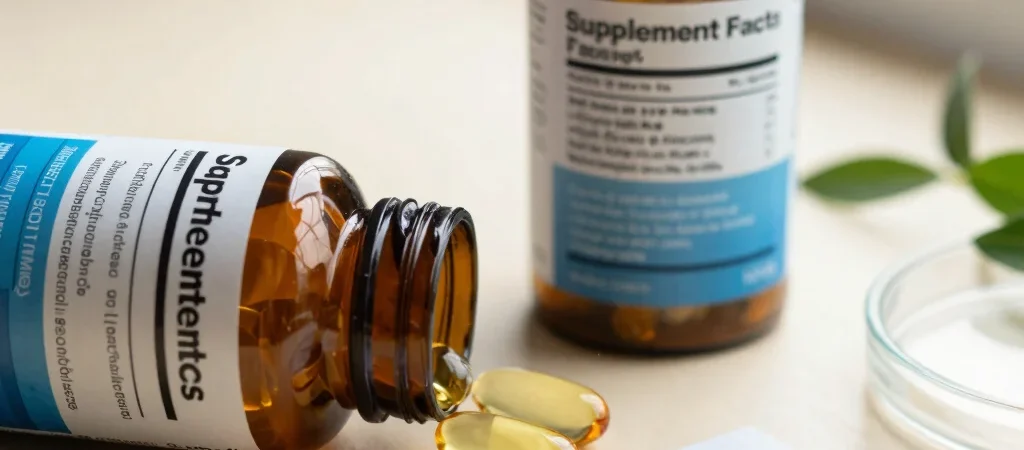
A fish oil bottle may put a large total-oil amount on its front, while the Supplement Facts panel separates out EPA and DHA. Those figures answer different questions, so it’s worth checking the panel before comparing products. The goal here is a clearer comparison, not a recommendation that fish oil belongs in everyone’s routine.
Find EPA and DHA
Look for the listed amounts of EPA and DHA per serving, and confirm how many softgels make up that serving. Don’t treat the total amount of fish oil as though it were the amount of either named fatty acid. If the panel does not make a detail clear, note that rather than guessing.
Check Source and Ingredients
Read the ingredient and allergen information to see the stated source and capsule ingredients. Some products may use fish oil and others may use algae oil, so check the actual label rather than relying on a product category or image. If you avoid particular ingredients, verify the package details before buying.
Compare Serving to Serving
Put two labels side by side and compare the same serving basis: EPA, DHA, other listed ingredients, and the number of softgels required. A simple comparison table in your notes can help keep front-panel marketing separate from facts on the panel. Affiliate links in VitaWellGo buying guides may earn us a commission, and any recommendation should be weighed against your own preferences and, when appropriate, advice from a qualified health professional.

